
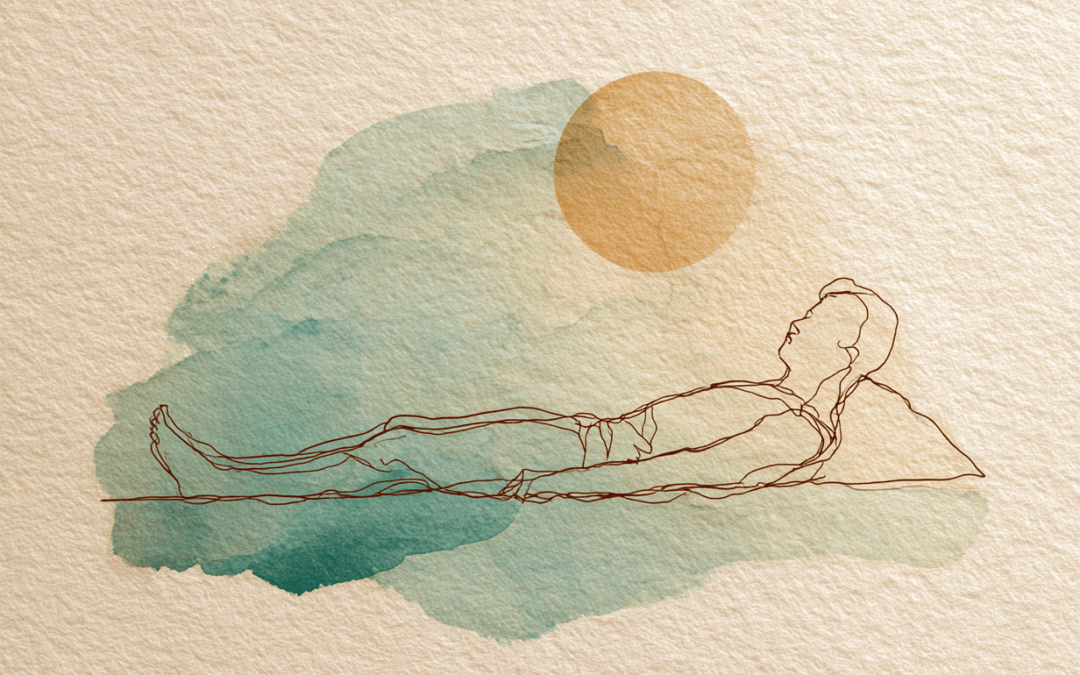
By July, many people feel an odd tension.
On the surface, life looks lighter.
Days are longer.
Schedules loosen.
There’s more sun, more movement, more social invitation.
And yet, beneath that, many nervous systems don’t relax.
They stay vigilant.
They stay productive.
They stay “on.”
From a biological and systemic perspective, this makes sense.
The nervous system doesn’t reset just because the calendar says summer.
It resets when it experiences enough safety, play, and unscheduled time.
Rest Is Not the Absence of Activity
We often misunderstand rest.
We imagine it as stopping, withdrawing, or doing nothing at all.
But for the nervous system, rest is not about inactivity — it’s about regulation.
A regulated system can move between:
- effort and ease
- connection and solitude
- stimulation and quiet
What exhausts us is not activity itself, but lack of rhythm.
When life becomes one long stretch of obligation — even pleasurable obligation — the system doesn’t downshift. It braces.
Summer, biologically, is meant to restore rhythm.
Why Play Matters More Than We Think
Play is not optional for human beings.
It is a core regulator of the nervous system.
Through play, the body experiences:
- spontaneity without consequence
- engagement without pressure
- connection without performance
Play tells the nervous system: “You are safe enough to experiment.”
This is why children play instinctively — and why adults often forget how.
Without play, even rest can feel tense.
Without play, joy becomes scheduled.
Without play, relationships can begin to feel transactional.
Repair Happens in the Gaps
One of the most overlooked aspects of summer is unscheduled time.
Not time off filled with plans.
Not ‘productive’ rest.
But genuine gaps.
Unstructured time allows the nervous system to complete cycles that were interrupted during the year:
emotional processing,
micro-repairs,
integration of experience.
This is often when insight arrives — not because we’re searching for it, but because the system finally has space to reorganize.
From a systemic lens, repair doesn’t happen through effort.
It happens when pressure is removed.
A Different Invitation for July
July doesn’t ask us to do more inner work.
It asks us to let something soften.
To notice:
- where effort has become habitual
- where urgency has replaced curiosity
- where even rest has turned into another task
The nervous system doesn’t need improvement in July.
It needs permission.
Permission to slow without guilt.
Permission to play without purpose.
Permission to rest without earning it.
Because regulation is not something we achieve.
It is something we allow.
And often, summer already knows how to guide us there — if we let it.