
On International Men’s Day, we often speak about men’s roles, responsibilities, and pressures.
Less often do we speak about men’s emotional visibility—or rather, the quiet absence of it.
In my work as a systemic psychologist, I don’t meet men who are “emotionally unavailable.”
I meet men who learned, very early on, which emotions were allowed for survive.
Many boys grow up receiving clear, consistent messages—sometimes explicit, often subtle:
- Be strong.
- Be useful.
- Be controlled.
- Don’t complain.
- Don’t need too much.
Over time, these messages don’t just shape behavior.
They shape inner access.
From a systemic perspective, emotional invisibility is not a personal deficit.
It is an adaptation.
When Expression Becomes Risky
In many family systems, a boy’s sensitivity is met with discomfort, correction, or silence.
Anger may be tolerated—sometimes even rewarded—while fear, sadness, tenderness, or confusion are quietly discouraged.
What follows is not emotional absence, but emotional narrowing.
Men often learn to translate complex internal states into something more acceptable:
- grief becomes irritation
- fear becomes control
- overwhelm becomes withdrawal
- longing becomes work
These are not character flaws.
They are survival strategies shaped within relational contexts.
Fathers Carry More Than They Say
For fathers, emotional invisibility often deepens.
Many men carry a profound sense of responsibility—to provide stability, certainty, and safety. Yet few were taught how to receive support themselves, or how to name what they feel without fearing it will destabilise the system.
I often hear fathers say:
“I should be able to handle this.”
“It’s not that bad.”
From a systemic lens, this isn’t indifference.
It’s loyalty—to family narratives that equated emotional expression with weakness, risk, or failure.
But children don’t learn emotional health from words alone.
They learn it by watching what is allowed to exist in the adults around them.
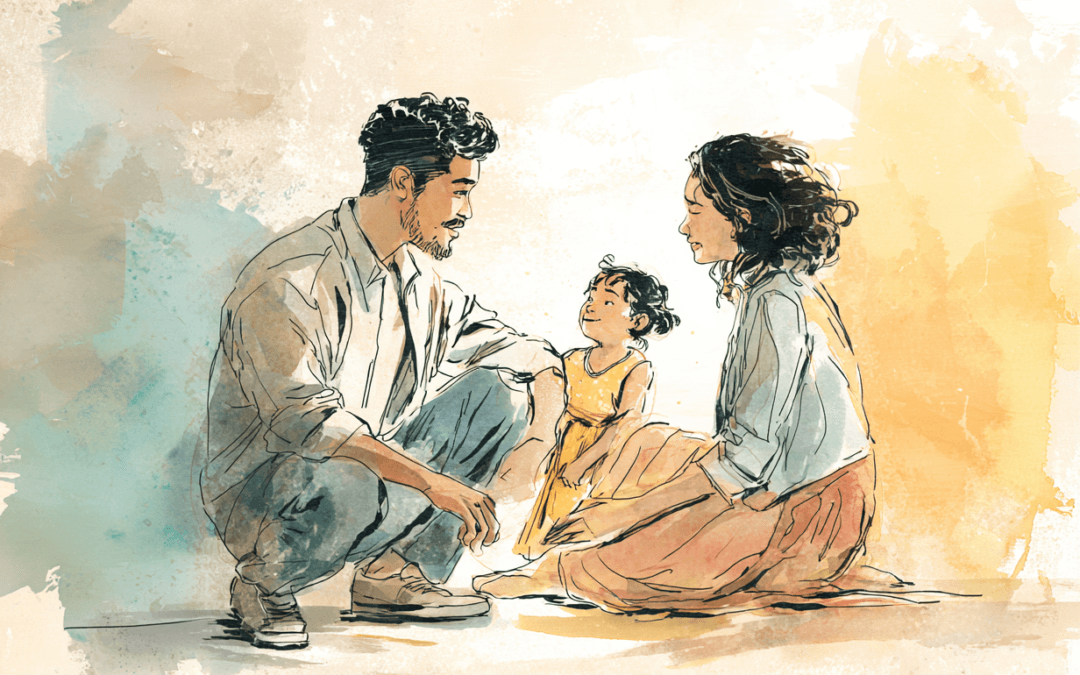
A father who can name uncertainty, sadness, or tenderness—without collapsing or disappearing—offers his children something invaluable: permission to be fully human.
Emotional Visibility Is Relational
Emotional visibility does not mean constant vulnerability or emotional exposure.
It means access.
Access to inner states.
Access to naming experience.
Access to being met, rather than managed.
From a systemic perspective, when men are emotionally invisible, families often reorganise around that absence. Partners may carry more emotional labor. Children may become attuned to unspoken tensions. The system adapts—but at a cost.
When emotional presence increases, even slightly, the system shifts.
Not dramatically.
Not overnight.
But meaningfully.
A Different Question for International Men’s Day
Rather than asking men to “open up more,” a systemic question might be:
- “What made it safer to stay silent?”
- “What did emotional restraint once protect?”
- “And what support would make expression feel possible now?”
Change does not begin with pressure.
It begins with conditions.
On this International Men’s Day, perhaps the invitation is not for men to be different—but for systems to become safer places for men to be seen.
Because when emotional visibility becomes possible for men, it doesn’t only benefit them.
It strengthens families, partnerships, and future generations.
And it reminds us of something deeply human:
You don’t become strong by disappearing parts of yourself.